

The trolley problem is a philosophical thought problem in which a runaway trolley is headed toward a group of people tied to the tracks, and a bystander has a lever that can divert it onto a side track where a smaller number of people are also tied. Pulling the lever directs the trolley towards the smaller number of people; doing nothing lets the trolley barrel towards the larger group. It is an ethical challenge pitting utilitarianism (saving more people) versus deontology (being actively complicit in harm). Neither option is acceptable, and both options carry moral weight.
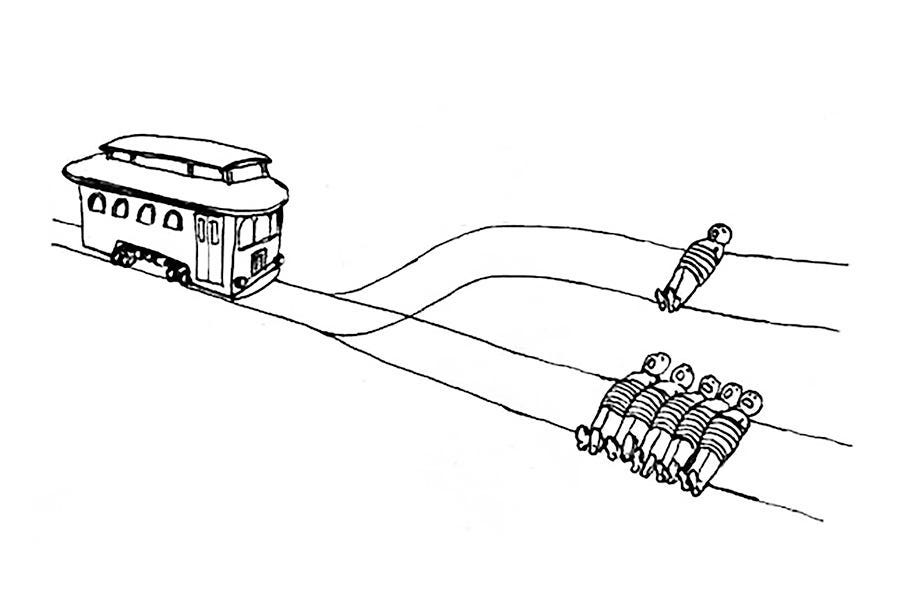
State SNAP administrators are now in roughly a similar position, with Payment Error Rates (PER) as the lever, program access as the diverging tracks, and temporal urgency set by the federal fiscal calendar.
The H.R.1 OBBBA signed in July 2025 imposed a new benefit cost-sharing penalty on state SNAP programs. If a state’s payment error rate sits above six percent, the state is required to absorb between five and fifteen percent of the state SNAP benefit costs that the federal government would otherwise have paid. These penalties would be in the hundreds of millions of dollars for some states.
In FY 2024, forty-four states were above that threshold, with a national average error rate of nearly eleven percent. SNAP is complicated and difficult to administer. The first cost-share payments come due in FY 2028, and the implications of these penalties would deeply harm state budgets to the degree that some states may need to abandon participation in the program entirely rather than pay these penalties.
The standard read of this is that error rates are an accuracy problem, and that tighter verification will fix them through stricter eligibility checks. The truer read is that error rates are more a function of administrative bandwidth than of fraud or willful misreporting. Caseworker queues are long, intake systems are slow, documentation requests get lost, recertification windows close on cases the state never had time to chase, and much of what the federal calculation counts as “error” is process load that compounds with every staffing shortage and every system bottleneck. The federal government, knowing this, is shifting costs to the states as a backdoor benefit cut with error rates as the convenient trigger. The actual problem state HHS commissioners are facing inside their agencies right now is that they are being asked to make a decision in a SNAP trolley problem they did not design and were given no time to engineer around.
The two harms
The first harm is keeping easy access mechanisms to SNAP intact. These include self-attestation of information like housing or utility expenses at intake, collateral contacts for questionable information, and other accommodations meant to help working families with messy schedules. These are the mechanisms that get benefits to eligible people, especially eligible people who do not have the time or document-keeping habits to navigate a stricter process and who are in crisis today.
Some contend, however, that these access mechanisms elevate PER due to client misreporting of these expenses, which is now a significant risk as HR1 pushes the cost-share liability up.
This introduces the second harm of tightening acceptable verification of expenses and household composition. Requiring documentation upfront, removing self-attestation and collateral contacts, slowing intake to allow human review etc. may reduce errors and the cost-share liability that comes with them (research is not conclusive as of yet), but they also exclude eligible people, including ones already most at the edge. Some will not be able to take a Thursday morning off the job that is keeping them in the eligible income band. Some will be unable to prove household composition if they have unstable housing. Some will simply drop out of the renewal process because the process is now harder than the benefit feels worth fighting for (the minimum benefit for SNAP is still less than $1 per person per day).
State administrators take this path because they believe it’s requisite to improve error rates, and therefore the program and state budgets will survive. Unfortunately, the eligible people who quietly fall off the state caseload will not appear in any payment error rate calculation.
This is the trolley problem: pull the lever and exclude some eligible people to keep the program operational for the broader population that can navigate a harder process, or do nothing and potentially let the cost-share penalty consume the agency’s ability to administer the program at all since the only way to avoid penalties is to opt out of the program. The state HHS commissioner who chooses to tighten verification is not making a moral mistake: they are forced into pulling the lever the track design left them.
Compounded by the 2025 shutdown
The 2025 federal government shutdown lasted forty-three days, the longest in American history, from October 1 to November 12. The most visible damage was the November SNAP interruption, the first programmatic lapse in history, which two federal judges had to order the administration to restore. The less visible damage was the destruction of the planning window in which states had been trying to engineer their way out of the SNAP trolley problem before it landed.
By late summer of 2025, the Food and Nutrition Service was helping forty-four states scope corrective action plans. Civic tech partners such as Code for America were proposing alternative verification architectures that could maintain access while bringing error rates down. State CIO offices were running parallel procurement conversations about what the next generation of eligibility systems would need to look like under the new federal penalty regime. The conversations were not all going to bear fruit. Most of them were not even going to be funded. But the planning conversations existed, and a meaningful number of states were committed to change.
The shutdown took two absolutely crucial months out of that planning timeline. States had to pivot completely to respond to a cascade of frequently changing guidance issued by USDA regarding operations and partial benefit payments. A number of state teams I spoke to were working 15 hour days just trying to stay current with guidance that, at times, shifted daily. By the time agencies were able to transition back to normal functions again in late November, the procurement calendars had collapsed against fiscal-year boundaries that had not moved. Contracts that needed to be signed had to be signed against whatever scope was already on the table, not against what the planning conversations had been pointing toward, and what was already on the table in most states was a renewal for an existing technological framework that had already caused high error rates in the first place.
The systems already locked in
The technology stacks most state SNAP agencies are running on are expensive, in most cases representing the single largest line item in the agency’s IT budget. Their historic performance is also a matter of public record, and the limitations of those incumbent systems contributed materially to the error rates that put states above the federal penalty threshold.
The result is that the cost-share penalty mechanism is being met in states by the same eligibility systems that produced the error rates the mechanism is designed to punish. The same processes are being paid more to fix the problems those processes helped create, on contracts that were signed under post-shutdown duress, with scope-of-work documents written against assumptions that pre-date the penalty mechanism entirely. The procurement cycle is now actively reinforcing the trolley problem rather than offering states a way around it.
The one legislative window left to pull the cost-share penalty timeline downstream is the 2026 Farm Bill, and the negotiations there are the closest thing to an off-ramp from the trolley that the system currently allows. A delay in the penalty implementation date (which is actively being discussed in the Senate) would buy states some of the planning surface the shutdown took away, and would create room for the kind of corrective action that the shutdown’s timing made impossible to scope. I pray this comes to fruition.
The catch is that many of the contracts that would lock in the current technology stacks for the next procurement cycle have already been signed, and pushing the penalty downstream does not undo these recent procurement decisions.
The third option
For SNAP, the diagnostic move is to stop arguing about which lever the commissioner should pull and start naming what built the track. None of this is a failure of individual judgment inside state agencies. All of it is upstream of the people who are now being asked to live with the consequences.
The natural inclination when faced with a trolley problem is to grasp for a third, nobler option that chooses to avoid all harm. For some select states, the question is not how state SNAP agencies should resolve the trolley problem, but whether there is still time to design a track that does not require choosing between access and program survival before the next round of procurement locks the current track in for another cycle that started the day the shutdown ended.
I am writing this in the same week I will be sitting in a room in Colorado with people who are still inside the planning window the shutdown closed elsewhere, working on exactly that question. They are asking whether eligibility processing and recertification can be redesigned in ways that get the math right without making the program harder to reach.
I am grateful for the chance to weigh in on a third option and determine whether it is still possible in the states that have not yet been forced to choose, and this fills me with impetus and with a little hope. The impetus is that there is real work to do this week in rooms where the question is still open with the right like-minded people. The hope is that there’s still time to design a way that preserves access and creates a strong foundation to keep the program going indefinitely.